As environmental regulations become more stringent and businesses place greater emphasis on sustainability, e-waste management has become a critical area during corporate audits. Organizations that generate electronic waste through laptops, desktops, servers, mobile devices, networking equipment, storage systems, and other IT assets are expected to demonstrate responsible disposal practices. A well-structured Enterprise E-Waste Audit helps verify that electronic waste is managed securely, transparently, and in compliance with environmental regulations.
For businesses, preparing for an e-waste audit is not simply about meeting legal requirements, it is about demonstrating accountability, protecting sensitive data, and reinforcing corporate sustainability commitments.
Why Enterprise E-Waste Audits Matter
An Enterprise E-Waste Audit evaluates how effectively an organization manages electronic waste throughout its lifecycle. Auditors review disposal processes, compliance documentation, asset tracking, recycling practices, and governance policies to ensure that electronic waste is handled responsibly.
A successful audit helps organizations:
- Demonstrate regulatory compliance
- Reduce environmental risks
- Strengthen corporate governance
- Support ESG reporting
- Improve operational transparency
- Protect confidential business information
Businesses that establish structured e-waste management programs are better prepared for both internal and external audits.
How to Prepare Your Business for an E-Waste Compliance Audit
Understanding how to prepare your business for an e-waste compliance audit begins with implementing standardized processes for managing obsolete IT assets.
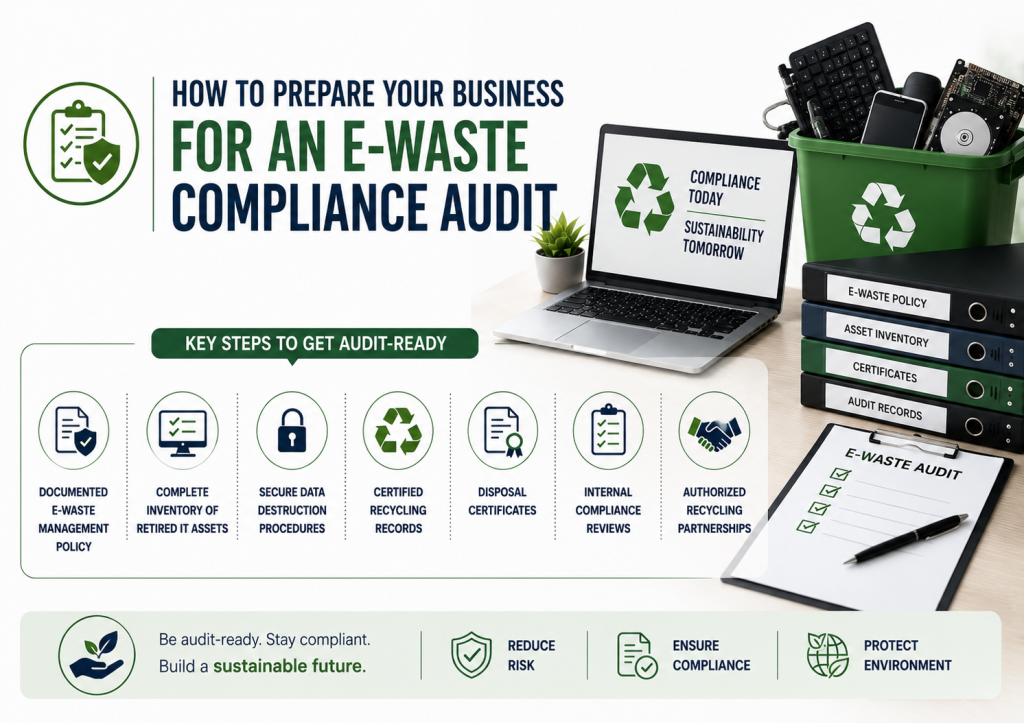
Organizations should ensure they have:
- A documented e-waste management policy
- Complete inventory of retired IT assets
- Secure data destruction procedures
- Certified recycling records
- Disposal certificates
- Internal compliance reviews
- Authorized recycling partnerships
Working with an MPCB-Approved E-Waste Recycler simplifies audit preparation by providing professionally managed documentation and certified recycling processes.
Building an Effective E-Waste Governance Framework
A strong e-waste governance framework provides the foundation for responsible electronic waste management. Governance ensures that every stage of the IT asset lifecycle is documented, monitored, and aligned with corporate policies.
Key elements include:
- Asset lifecycle management
- Defined disposal responsibilities
- Data security controls
- Environmental compliance procedures
- Vendor management policies
- Audit-ready documentation
Organizations with a structured governance framework can respond more efficiently during audits while maintaining regulatory compliance.
Environmental Compliance Auditing Focus Areas
During environmental compliance auditing, auditors typically evaluate whether businesses follow applicable environmental regulations and maintain complete records of their disposal activities.
Auditors often review:
- Asset disposal history
- Recycling certificates
- Data destruction certificates
- Collection and transportation records
- Regulatory reporting
- Compliance documentation
- Vendor authorizations
Professional recyclers offering Complete EPR Management & Compliant Recycling help organizations maintain these records accurately and consistently.
Corporate Waste Management Documentation Is Essential
Maintaining accurate corporate waste management documentation is one of the most important aspects of audit readiness.
Businesses should preserve:
- IT asset inventories
- Disposal authorization records
- Collection logs
- Recycling certificates
- Certificates of data destruction
- EPR compliance records
- Audit reports
Well-organized documentation demonstrates accountability and significantly reduces compliance risks during inspections.
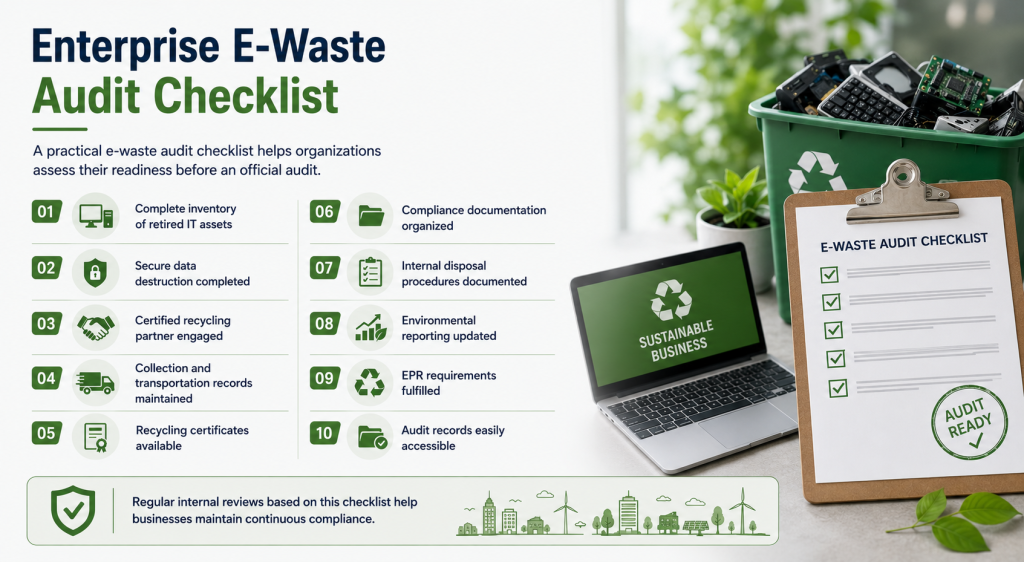
Enterprise E-Waste Audit Checklist
A practical E-waste audit checklist helps organizations assess their readiness before an official audit.
Key checklist items include:
- Complete inventory of retired IT assets
- Secure data destruction completed
- Certified recycling partner engaged
- Collection and transportation records maintained
- Recycling certificates available
- Compliance documentation organized
- Internal disposal procedures documented
- Environmental reporting updated
- EPR requirements fulfilled
- Audit records easily accessible
Regular internal reviews based on this checklist help businesses maintain continuous compliance.
Complete EPR Management & Pan-India Services
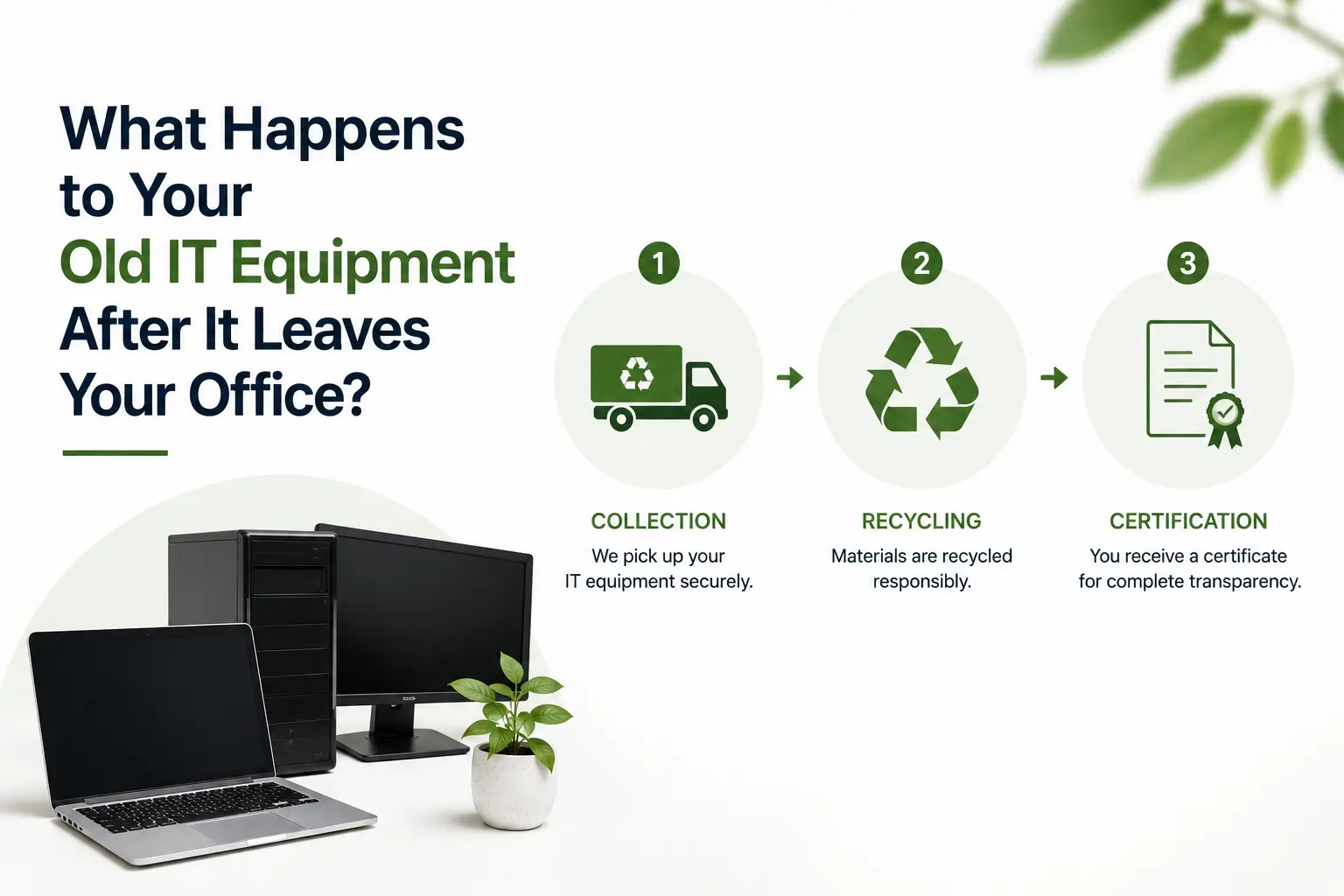
Managing enterprise e-waste becomes easier with an experienced recycling partner. Ambito E-Care provides Complete EPR Management & Compliant Recycling, supporting organizations with collection, secure data destruction, recycling, documentation, reporting, and compliance certification.
The company also offers Pan-India Services, enabling enterprises with multiple offices to implement standardized e-waste management practices across all locations.
As an MPCB-Approved E-Waste Recycler, Ambito E-Care recycles desktops, laptops, servers, mobile phones, tablets, routers, modems, PCBs, cables, keyboards, mice, USB devices, and other electronic waste through environmentally responsible processes.
Being Committed to Compliance, Sustainability, and Responsible Recycling, Ambito E-Care helps organizations stay audit-ready while supporting long-term environmental goals.
Conclusion
Preparing for an Enterprise E-Waste Audit requires more than simply disposing of obsolete IT equipment. Organizations must understand how to prepare their business for an e-waste compliance audit, establish a strong e-waste governance framework, maintain comprehensive corporate waste management documentation, and follow a structured e-waste audit checklist to ensure continuous compliance.
By partnering with an MPCB-Approved E-Waste Recycler like Ambito E-Care, businesses benefit from Complete EPR Management & Compliant Recycling, Pan-India Services, and a trusted partner Committed to Compliance, Sustainability, and Responsible Recycling. This enables organizations to confidently meet audit requirements while protecting the environment and strengthening corporate governance.