Technology procurement is no longer just about selecting the latest laptops, servers, desktops, or networking equipment at the best price. Today, organizations are expected to consider the complete lifecycle of every IT asset—from procurement and deployment to retirement and recycling. This shift has made Sustainable IT Procurement a key element of corporate sustainability, compliance, and responsible business operations.
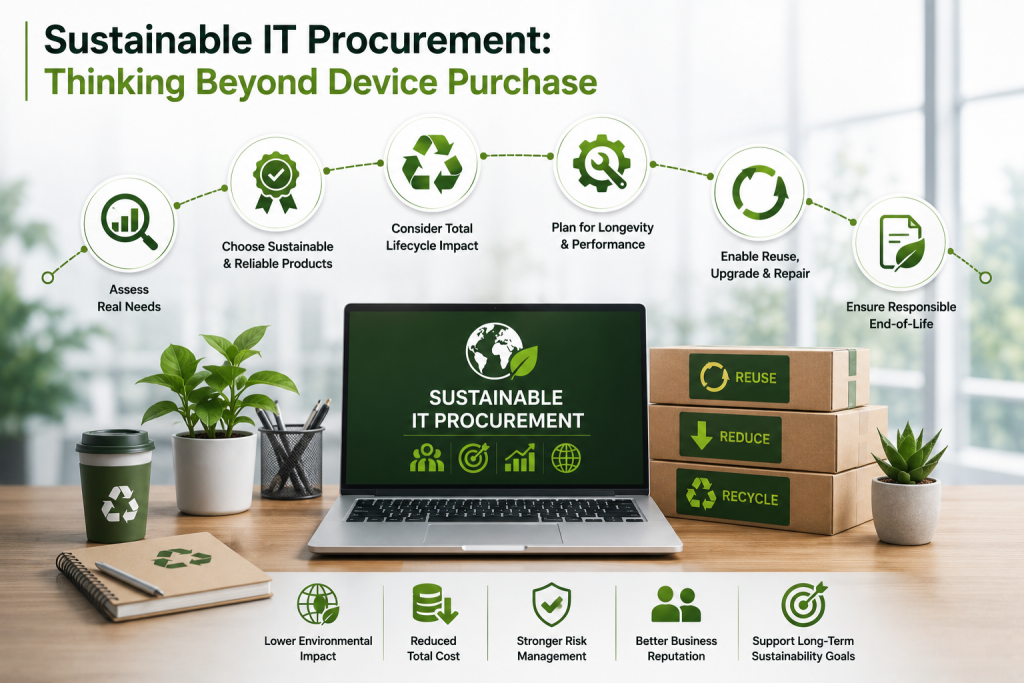
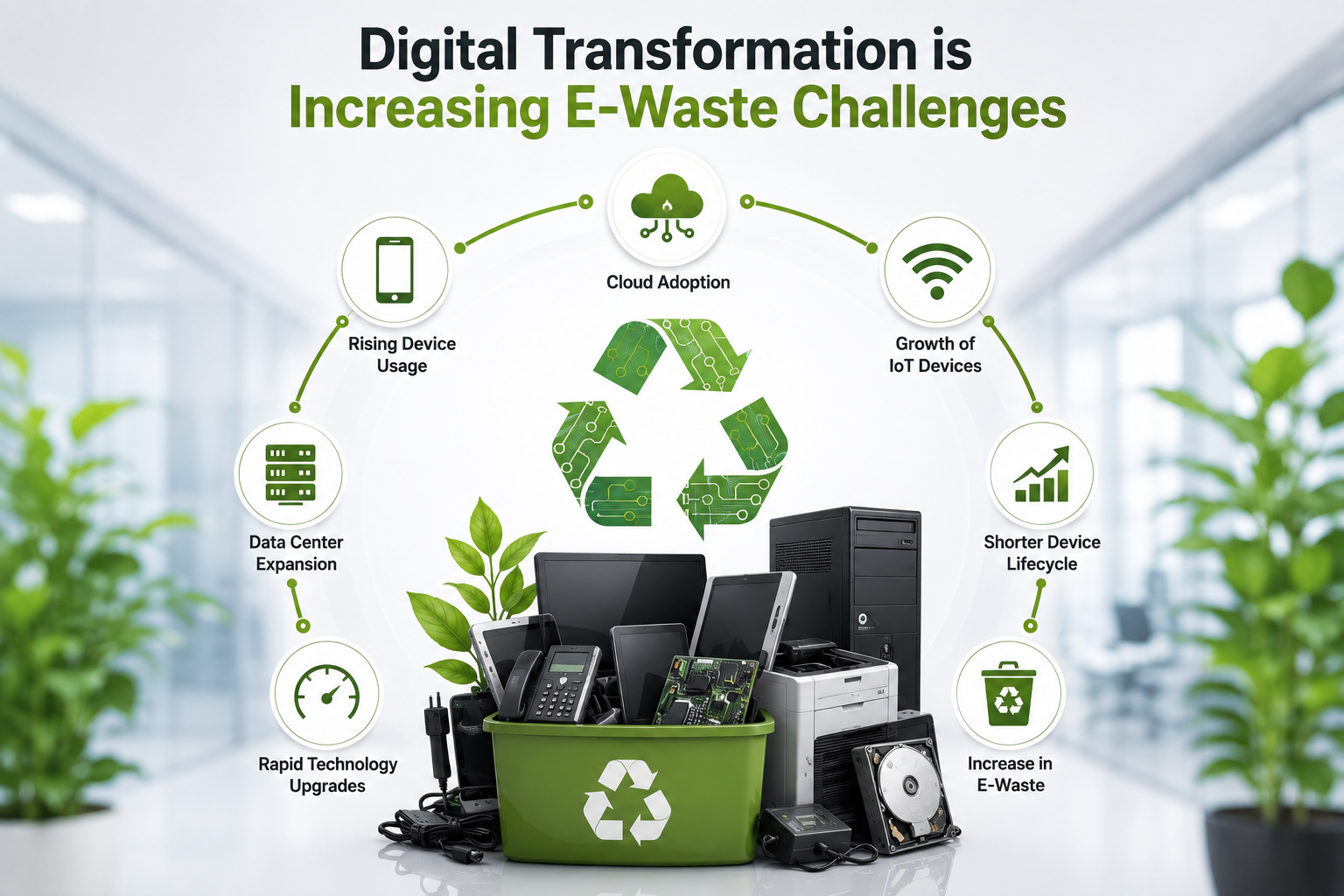
As businesses accelerate digital transformation and regularly upgrade their technology infrastructure, procurement decisions have a direct impact on electronic waste generation. By thinking beyond the initial device purchase, organizations can reduce environmental impact, strengthen governance, and create long-term value through responsible technology management.
Why Sustainable IT Procurement Matters
Every electronic device purchased today will eventually reach the end of its operational life. Without proper planning, outdated laptops, desktops, servers, mobile devices, routers, cables, and storage systems can become electronic waste, creating environmental and compliance challenges.
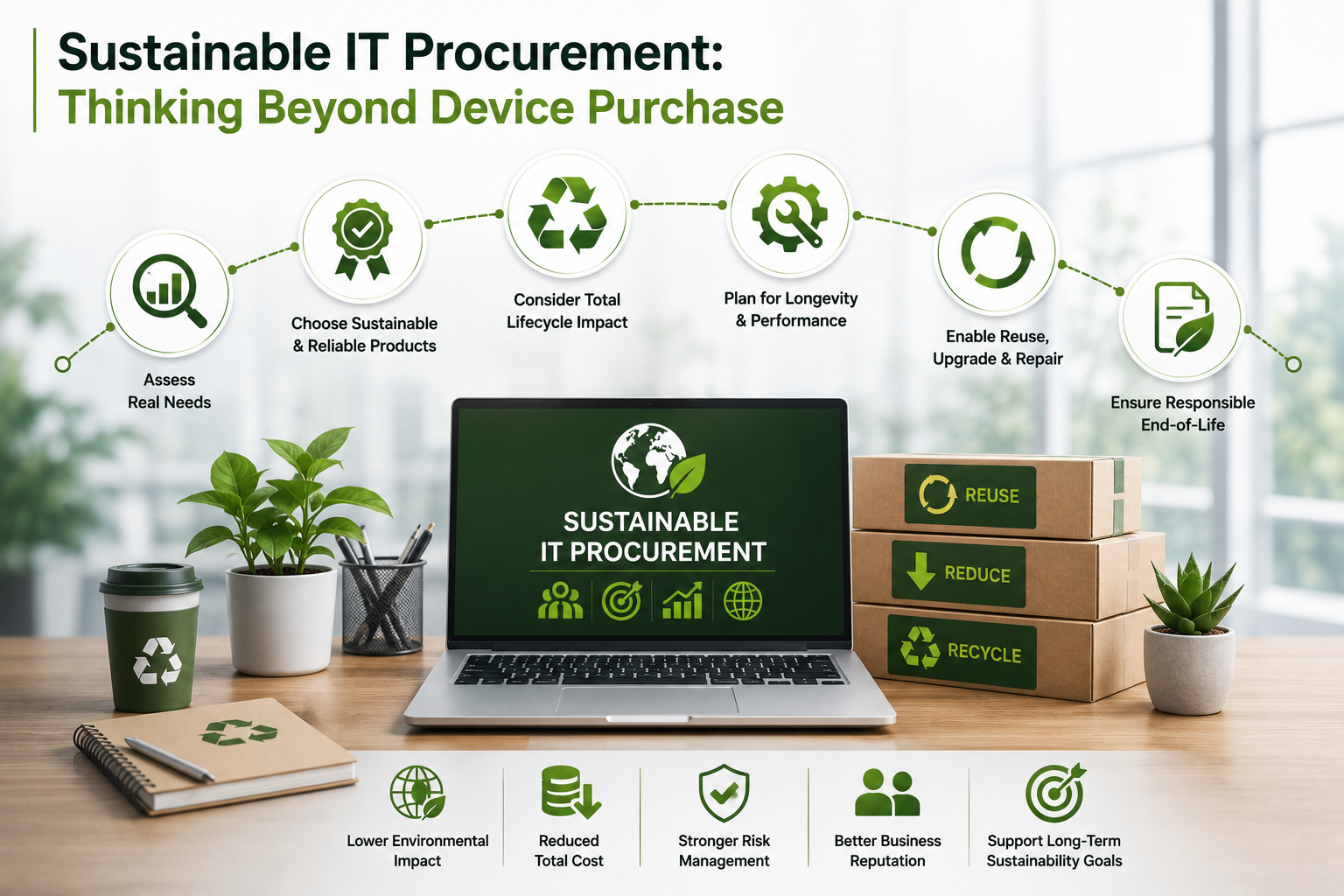
Sustainable IT Procurement encourages organizations to evaluate the entire lifecycle of technology assets before making purchasing decisions. This includes considering durability, energy efficiency, recyclability, secure retirement, and responsible end-of-life management.
By integrating sustainability into procurement strategies, businesses can minimize waste while improving operational efficiency and supporting environmental goals.
Green Procurement Practices Build Long-Term Value
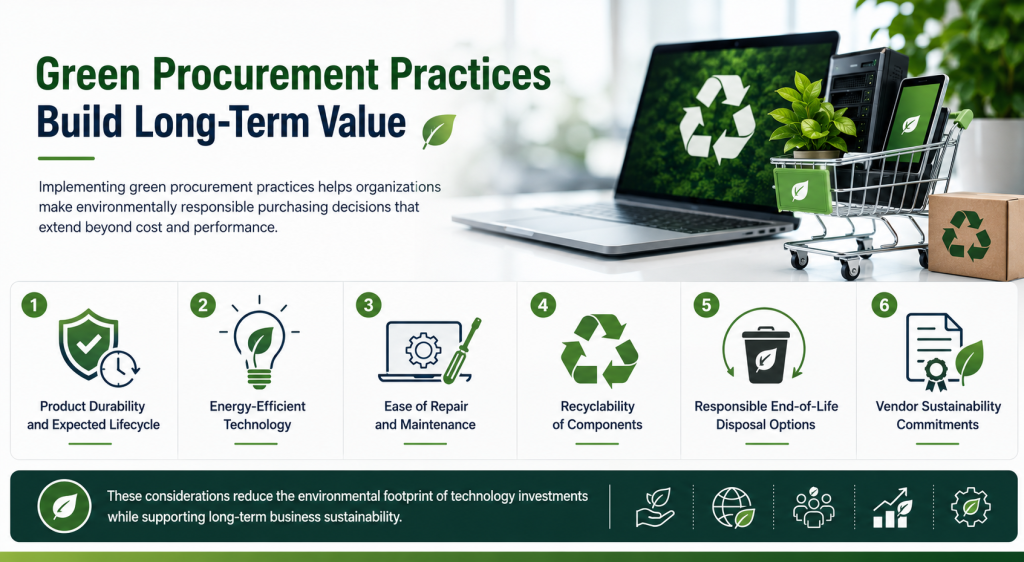
Implementing green procurement practices helps organizations make environmentally responsible purchasing decisions that extend beyond cost and performance.
Procurement teams should consider:
- Product durability and expected lifecycle
- Energy-efficient technology
- Ease of repair and maintenance
- Recyclability of components
- Responsible end-of-life disposal options
- Vendor sustainability commitments
These considerations reduce the environmental footprint of technology investments while supporting long-term business sustainability.
Responsible Technology Purchasing Reduces Future Risks
Responsible technology purchasing is about selecting equipment that aligns with both business objectives and sustainability commitments.
Organizations that include lifecycle planning during procurement benefit from:
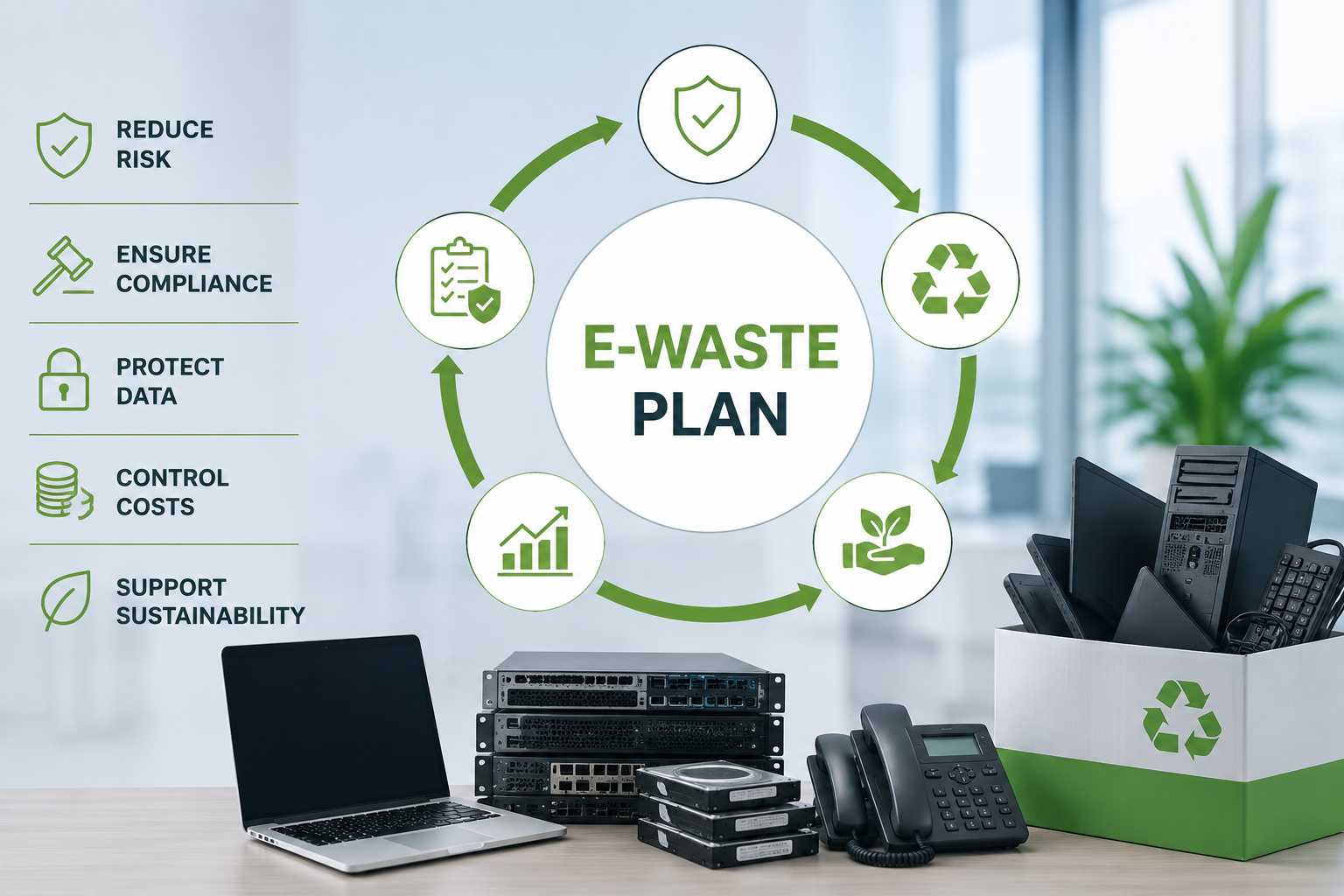
- Reduced electronic waste generation
- Lower replacement costs
- Better asset utilization
- Improved regulatory compliance
- Stronger ESG performance
- Simplified end-of-life asset management
Procurement teams should also establish partnerships with authorized recycling providers before assets reach retirement, ensuring a smooth and compliant disposal process.
Eco-Friendly IT Purchasing Supports Circular Economy Goals
Adopting eco-friendly IT purchasing enables businesses to contribute to a circular economy by selecting technology that supports responsible reuse, recycling, and resource recovery.
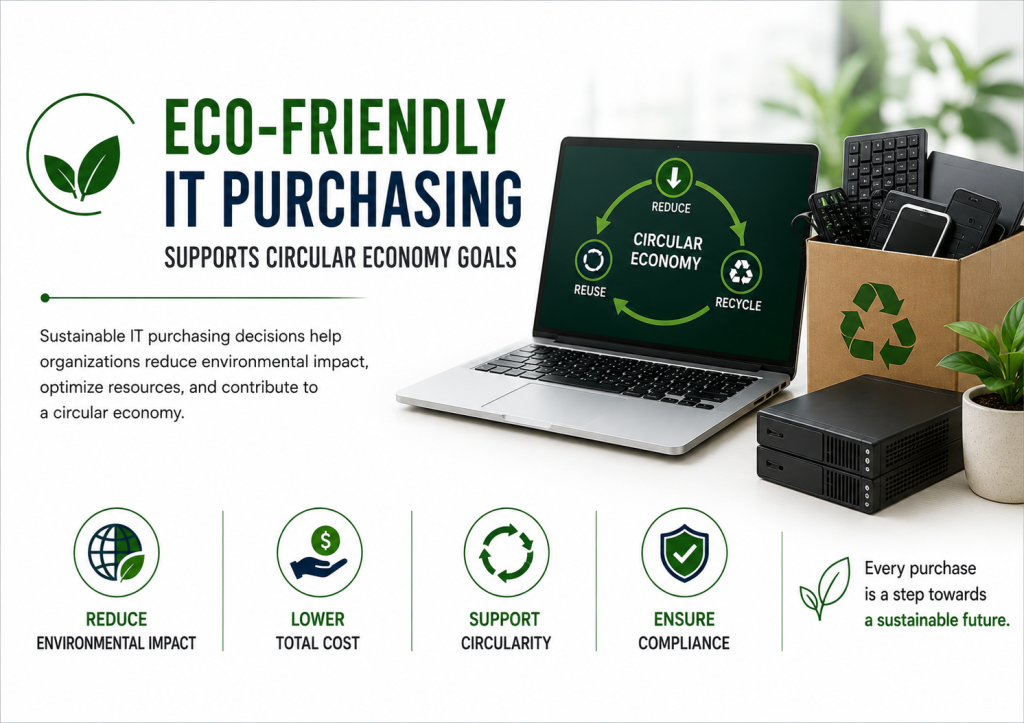
Rather than viewing obsolete equipment as waste, organizations can recover valuable materials through authorized recycling processes. This reduces dependence on raw material extraction while minimizing landfill waste and environmental pollution.
Working with an MPCB-Approved E-Waste Recycler ensures that retired IT assets are recycled through environmentally responsible and compliant processes.
How Sustainable IT Procurement Reduces Electronic Waste
Understanding how sustainable IT procurement reduces electronic waste begins with integrating disposal planning into every purchasing decision.
Organizations can significantly reduce waste by:
- Planning complete IT asset lifecycles
- Implementing structured replacement schedules
- Extending the useful life of equipment where possible
- Recycling obsolete assets responsibly
- Maintaining asset inventories and disposal records
- Partnering with authorized recyclers for end-of-life management
These practices help organizations reduce unnecessary waste while improving operational efficiency and environmental performance.
Complete EPR Management & Compliant Recycling
Responsible procurement extends beyond purchasing—it also includes ensuring compliant disposal of retired equipment.
Ambito E-Care provides Complete EPR Management & Compliant Recycling, helping businesses manage the collection, recycling, reporting, and certification of electronic waste. These services simplify regulatory compliance while supporting transparent and sustainable waste management practices.
Businesses receive proper documentation and compliance records that support audits, inspections, and ESG reporting.
Pan-India Services for Enterprise IT Lifecycle Management
Organizations operating across multiple offices require consistent e-waste management practices. Ambito E-Care offers Pan-India Services, enabling businesses to implement standardized collection and recycling processes across all locations.
As an MPCB-Approved E-Waste Recycler, Ambito E-Care specializes in recycling desktops, laptops, servers, mobile phones, tablets, routers, modems, PCBs, cables, keyboards, mice, USB devices, and other electronic waste.
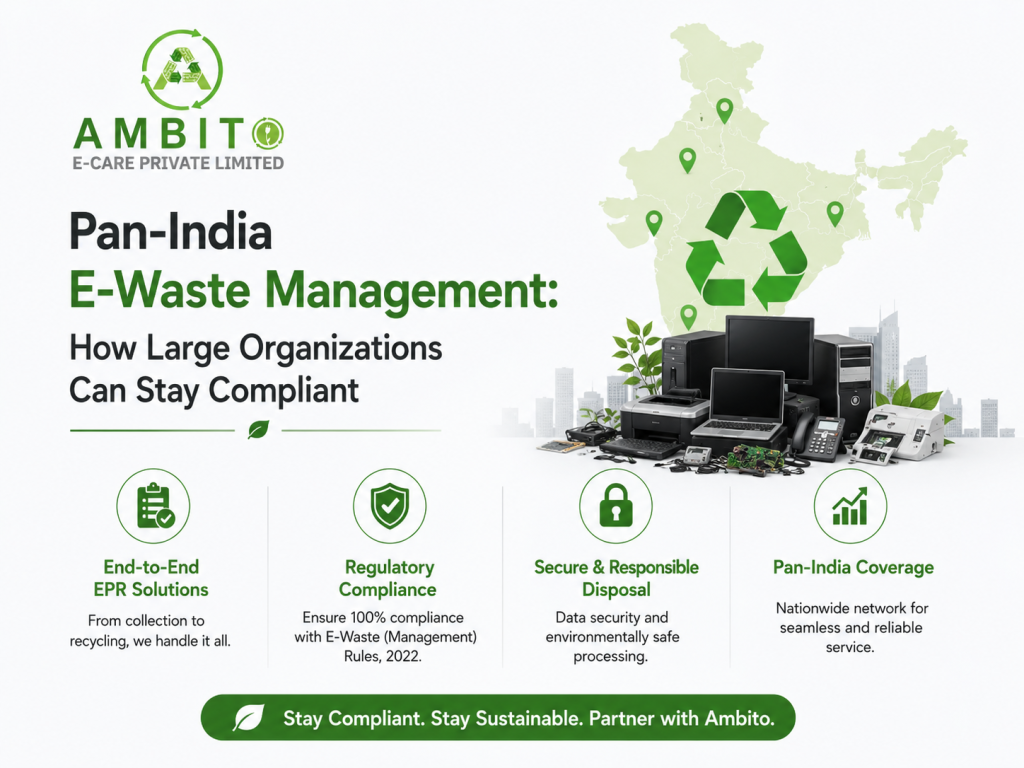
The company is Committed to Compliance, Sustainability, and Responsible Recycling, ensuring that organizations manage technology assets responsibly throughout their lifecycle.
Conclusion
Sustainable IT Procurement is no longer limited to choosing the right device—it is about making informed decisions that support environmental responsibility throughout the entire technology lifecycle. By adopting green procurement practices, embracing responsible technology purchasing, investing in eco-friendly IT purchasing, and understanding how sustainable IT procurement reduces electronic waste, businesses can strengthen sustainability while improving operational performance.
Partnering with an MPCB-Approved E-Waste Recycler like Ambito E-Care provides organizations with Complete EPR Management & Compliant Recycling, Pan-India Services, and a trusted partner Committed to Compliance, Sustainability, and Responsible Recycling. Together, these solutions help businesses build a smarter, greener, and more sustainable future.