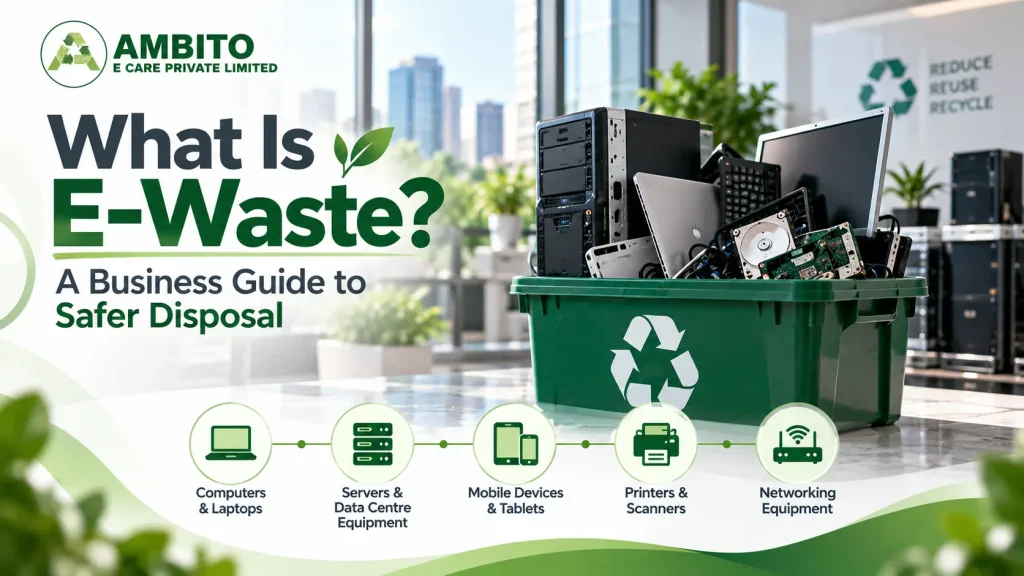
As part of upgrading your company’s IT, you have 200 laptops to replace and your servers to upgrade. You now have old equipment sitting in your spare room. However, the old devices could have valuable materials that can be recycled, contain sensitive information and have parts that need to be handled with care. To manage these assets well, it is important to understand what e waste actually is. This way, your business can ensure that it disposes of outdated devices securely.
What Is E-Waste?
E-waste refers to any electrical or electronic equipment that has been disposed of. This can include complete devices or just parts of devices. This also includes any rejected items from manufacturing, refurbishing and repair processes. As per the E-Waste (Management) Rules, 2022 in India, e-waste will also include any discarded solar photovoltaic modules, panels or cells.
At its most basic, e-waste means any device that has been disposed of. Even if your computer is still functional but you no longer need it in your business, it will be classed as e-waste.
By understanding what items are e-waste, you can create a clear process for retiring your assets.
Which Electronic Items Are Considered E-Waste?
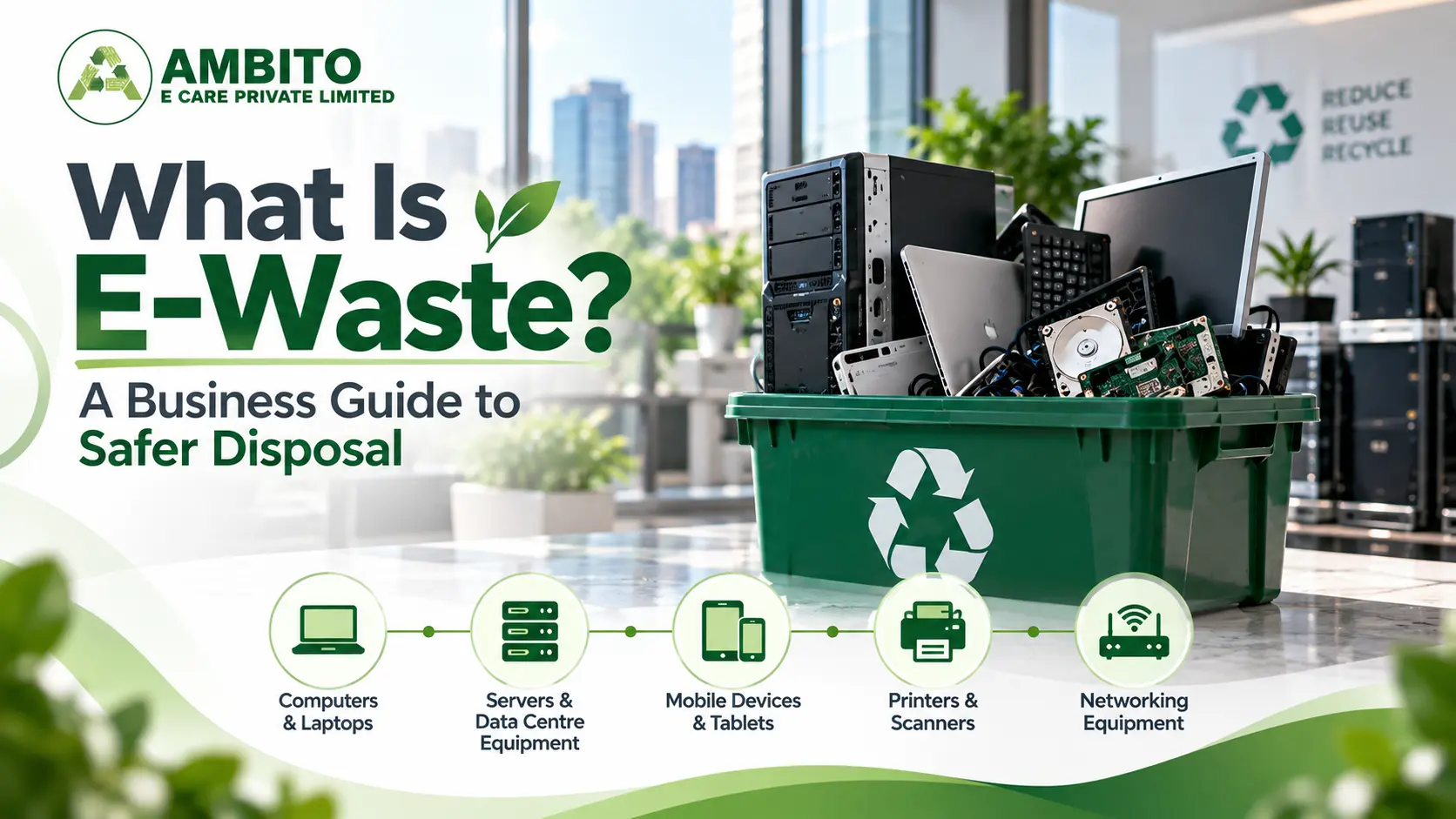
Almost every department within your organisation will have e-waste. Some common items include:
- IT – desktops, laptops, servers, storage devices and parts.
- Communication – mobile phones, tablets, routers, modems and networking devices.
- Office – printers and scanners.
- Accessories – keyboards, mice, USBs, circuit boards and electronic cables.
When your company is moving offices, your IT team may look at the computers your employees are using. However, your facilities managers may find lots of unused printers, broken monitors and networking devices.
You should assess each item to see if it can be reused, refurbished or recycled correctly. If it can be reused safely do not just throw it away. If it has reached the end of its life then it should be disposed of responsibly.
For businesses disposing of bulk IT equipment, desktops and laptops recycling services can help identify appropriate collection and recycling options for retired electronic assets.
Why Is E-Waste Important?
There are a few reasons why it is important to manage e-waste.
1. Environmental impact
Electrical devices can contain valuable resources such as copper, aluminium, glass and some precious metals. They can also contain harmful substances such as lead, cadmium and mercury. If they are not dismantled, extracted and disposed of correctly by informal methods, people and the environment can be exposed to harmful materials.
By responsibly recycling you can extract the resources that can be used again.
2. Security risk
Old laptops, servers, mobiles and storage devices can still have sensitive documents, customer information, employee information and business credentials.
Even if you delete the files or factory reset the device it may not be enough. You should ensure you have a correct process for wiping or destroying the data on your devices.
Businesses handling confidential information can explore secure data destruction and sanitisation solutions to understand available data-wiping, destruction and documentation options.
3. Compliance
It is important to understand what environmental requirements apply to your business. As per the E-Waste (Management) Rules, 2022 in India, there are specific requirements for certain stakeholders within the industry. This will depend on what role your organisation plays and what equipment you are dealing with.
Ensure you understand what applies to you, use the correct recycling partners who have the correct registrations/authorisations, and keep records of collection, recycling and data destruction.
How Can Your Business Dispose Of E-Waste Responsibly?
Creating a process will make it easier to manage your e-waste.
1. Identify your retired assets. Make a list of what equipment you have, how many, asset ID, what condition they are in and where they are stored. Separate any functioning items.
2. Can they be reused or refurbished? See if any of the items can be reused within your business or if they can be safely refurbished. This will help you get more use out of your items.
3. Ensure your business information is secure. Decide who can authorise releasing the assets and what method you will use to wipe or destroy the data. Keep records of what devices have had the correct security measures.
4. Choose the right recycling partner. Ensure the recycling partner has the correct authorisations/registrations, what equipment they will collect, how they will handle the items, and if they can provide the correct documentation. Do not just choose the cheapest option.
5. Keep records of disposal. Keep a list of what you have, what has been handed over, any relevant recycling certificates and data destruction. This will help your procurement, IT and compliance teams understand what has happened to the retired assets.
If your organisation has multiple offices, having a central process will help keep things consistent.
How Can Ambito E-Care Help Your Business Manage E-Waste?
If your business needs to have a structured process for collecting and recycling your e-waste, then you can look into Ambito E-Care’s services. Ambito E-Care are an MPCB-Approved E-Waste Recycler based in Mumbai. They offer e-waste recycling solutions across India.
The team collects and recycle desktops, laptops, servers, mobiles, networking devices, printers and electronic accessories. They can also provide secure data destruction and relevant documentation.
Ensure you know what service you need, what authorisations they have, what equipment they will collect and what documentation they can provide.
Frequently Asked Questions (FAQs)
Q1. What is e-waste?
Ans: E-waste is any electrical or electronic equipment that has been disposed of. This can include computers, mobile phones, printers, servers and parts. It is any equipment that is no longer needed or has reached the end of its life.
Q2. What is the difference between electronic waste and general waste?
Ans: Electronic waste is any waste from electrical or electronic equipment. It can contain valuable resources and can contain harmful substances. General waste is any other waste such as packaging or food. E-waste should be disposed of correctly.
Q3. Why should I recycle my electronic waste?
Ans: By responsibly recycling you can extract valuable materials. It will reduce the risk of it being disposed of incorrectly. Having a process in place will help you keep track of your assets being handed over. It will also help with your data security and compliance requirements.
Q4. What should I check before choosing an e-waste recycler?
Ans: Ensure they have the correct authorisations/registrations, what equipment they will take, secure collection and transport, data destruction and correct documentation for recycling and handing over.
Conclusion
Understanding what e waste is will help your business make better decisions. By responsibly disposing of your devices you will have a process in place to assess your equipment, keep your data secure, recycle correctly and keep records.
If your organisation has old IT equipment, start by creating a list of your assets and create a documented process. Businesses can explore corporate e-waste recycling solutions to manage outdated IT equipment securely and responsibly.