E-Waste Compliance Is About More Than Disposing of Old Devices
When a company replaces laptops, desktops, servers, or other electronic equipment, the focus is often on purchasing and deploying new technology. But what happens to the old equipment is equally important.
E-waste compliance for businesses involves ensuring that retired electronic assets are managed through appropriate processes, with proper handling, documentation, and recycling practices. Additional registration and EPR compliance obligations may also apply to firms that fit into relevant regulatory categories.
Businesses can lower operational risks and promote ethical environmental practices by using a systematic strategy.
Understand Your Company’s Role and Responsibilities
The first step in e-waste compliance is understanding what role your organization plays in the electronics ecosystem.
Under India’s E-Waste (Management) Rules, 2022, specific requirements apply to entities such as producers, manufacturers, recyclers, and refurbishers. EPR obligations are particularly relevant to producers covered under the applicable framework.
However, even businesses that are primarily users of electronic equipment should establish responsible internal processes for managing retired IT assets.
A good starting point is to ask:
- What electronic equipment does the company use?
- Which devices are reaching the end of their useful life?
- Who is responsible for approving asset retirement?
- How is sensitive data protected?
- Where will the retired equipment go?
- What records will the company maintain?
Build Corporate E-Waste Management Into Your IT Process
Effective corporate e-waste management should not begin when a storeroom is already full of outdated devices.
Businesses can create a smoother process by including asset retirement in their regular IT lifecycle planning. This means maintaining an inventory of equipment and establishing clear procedures for devices that are no longer required.
A practical internal process may include:
- Identifying and recording retired IT assets
- Securing or removing sensitive data
- Storing equipment safely before collection
- Arranging collection through an appropriate recycler
- Maintaining relevant disposal and recycling records
This approach makes e-waste compliance for businesses easier to manage over time.
Choose an Authorized E-Waste Recycler
Choosing the appropriate recycling partner is one of the most crucial choices. Companies should steer clear of unofficial disposal methods when it’s unknown where electronic equipment will end up.
A more organized method to collection, safe handling, recycling, and documentation can be offered by an approved e-waste recycler.
Before choosing a partner, businesses should understand whether the provider offers:
- Secure collection and transportation
- Chain-of-custody processes
- Data destruction support
- Responsible recycling
- Compliance-related documentation
- Support for applicable EPR requirements
Working with the right partner can strengthen both operational control and compliant e-waste recycling practices.
Don’t Overlook Documentation and Traceability
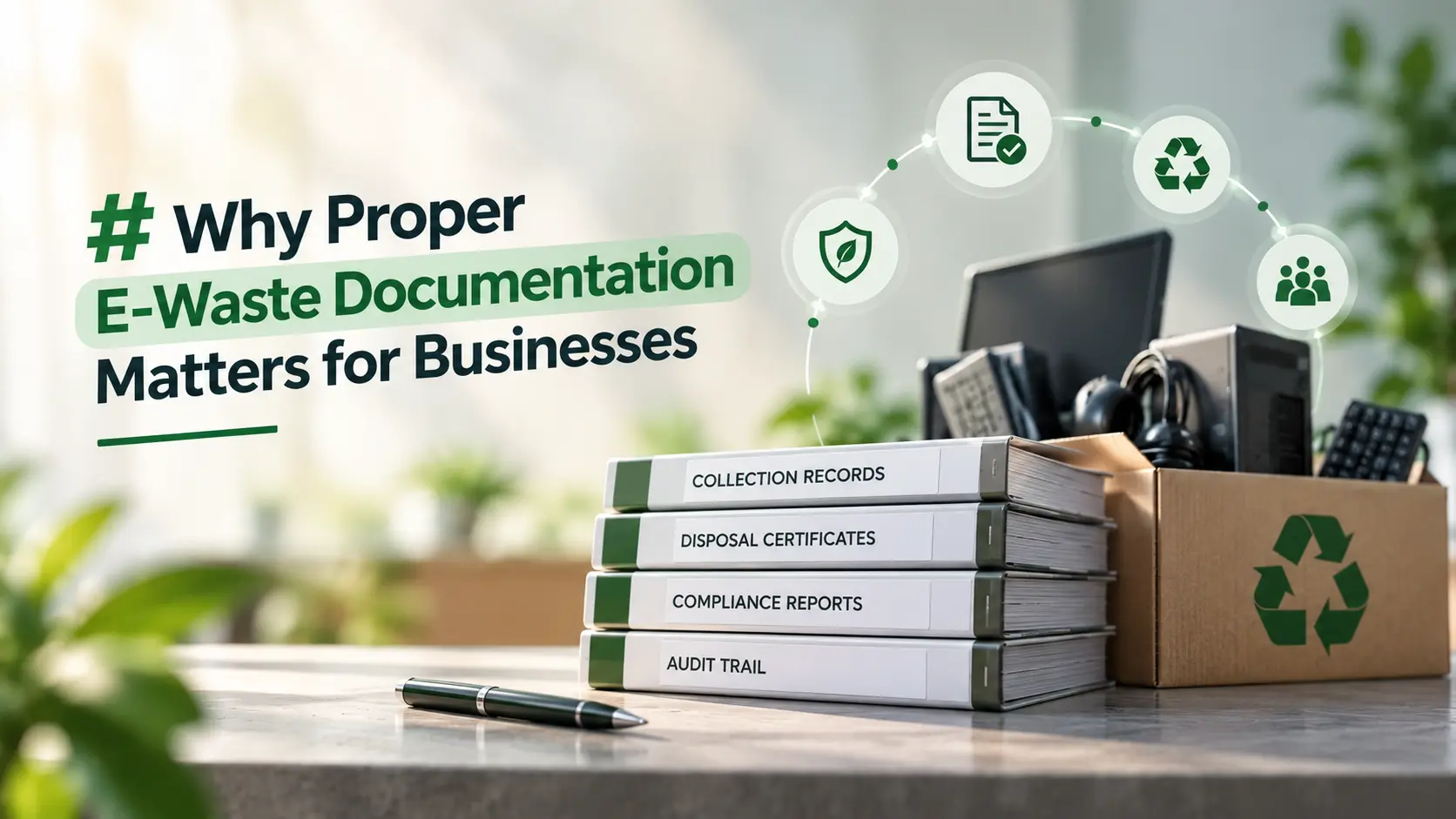
Compliance is difficult to demonstrate without records. Businesses should maintain documentation relating to retired equipment and its movement through the disposal process.
Asset inventories, collection information, e-waste manifests, recycling certifications, and data destruction certificates are examples of relevant records, depending on the services involved.
Internal audits, sustainability reporting, and more general business compliance needs are all supported by adequate documentation.
Keep EPR Compliance Separate From General Disposal
One common mistake is assuming that every business disposing of old laptops automatically has the same EPR responsibilities.
EPR compliance depends on the organization’s role under applicable electronic waste regulations. Producers have specific obligations under India’s EPR framework, while other organizations may have different responsibilities.
Therefore, rather than using a one-size-fits-all strategy, businesses should comprehend the legislation pertinent to their activities.
Frequently Asked Questions
Q1. What is e-waste compliance for businesses?
Ans: It involves managing retired electronic assets through proper handling, recycling, documentation, and applicable regulatory processes.
Q2. Do all businesses have EPR compliance obligations?
Ans: No. EPR responsibilities depend on the organization’s role under applicable e-waste regulations.
Q3. Why should businesses use an authorized e-waste recycler?
Ans: An authorized recycler can support secure collection, responsible recycling, data destruction, and compliance documentation.
Conclusion: Make Compliance Part of the IT Asset Lifecycle
Planning, not last-minute disposal, is the first step toward strong e-waste compliance for businesses. Organizations may develop a more responsible approach to electronic waste management by keeping track of retired assets, safeguarding sensitive data, keeping records, and utilizing the proper recycling routes.
Ambito E-Care supports organizations with secure and systematic e-waste solutions across India. As an MPCB-Approved E-Waste Recycler, Ambito E-Care provides Pan-India Services for laptops, desktops, servers, mobile devices, cables, PCBs, and other electronic waste.
With secure logistics, data destruction, compliance documentation, and Complete EPR Management & Compliant Recycling, Ambito E-Care helps businesses strengthen their approach to responsible electronic waste management while remaining committed to Compliance, Sustainability, and Responsible Recycling.