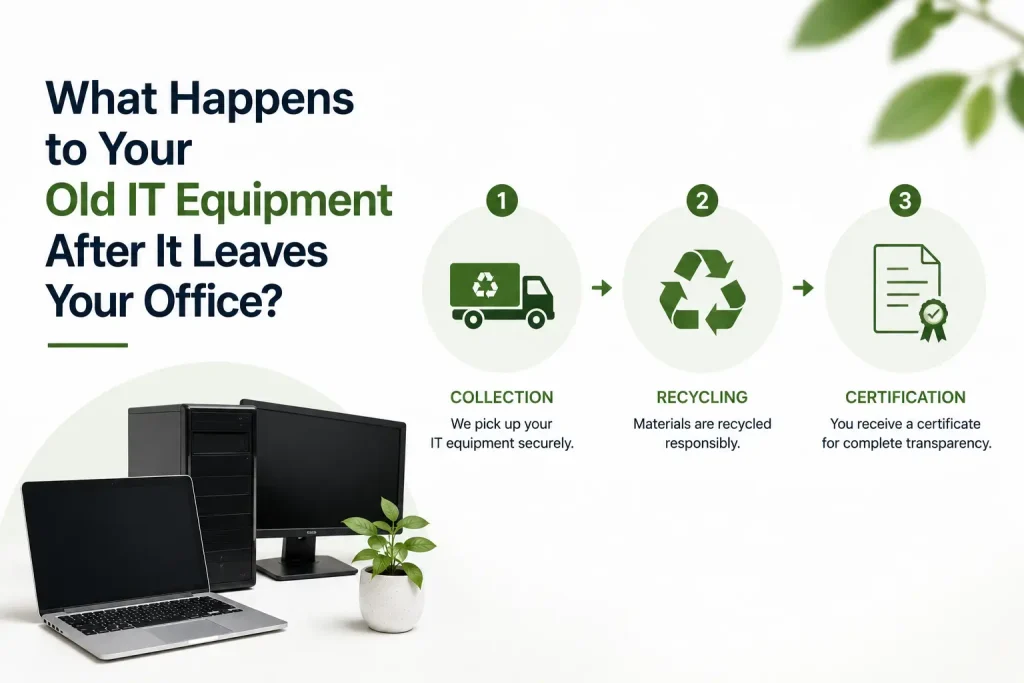
The Journey of Old IT Equipment Doesn’t End at Collection
When a business replaces old laptops, servers, desktops, or networking devices, the equipment is usually removed from the office and handed over for disposal. But have you ever wondered what happens to old IT equipment after it leaves your workplace?
For businesses, this question is important. Retired devices may contain confidential information, reusable components, valuable materials, and substances that require careful handling. This is why old IT equipment disposal should be viewed as a complete journey rather than a simple pickup service.
Here is what typically happens when IT assets enter a professional recycling process.
Stage One: Collection and Secure Movement
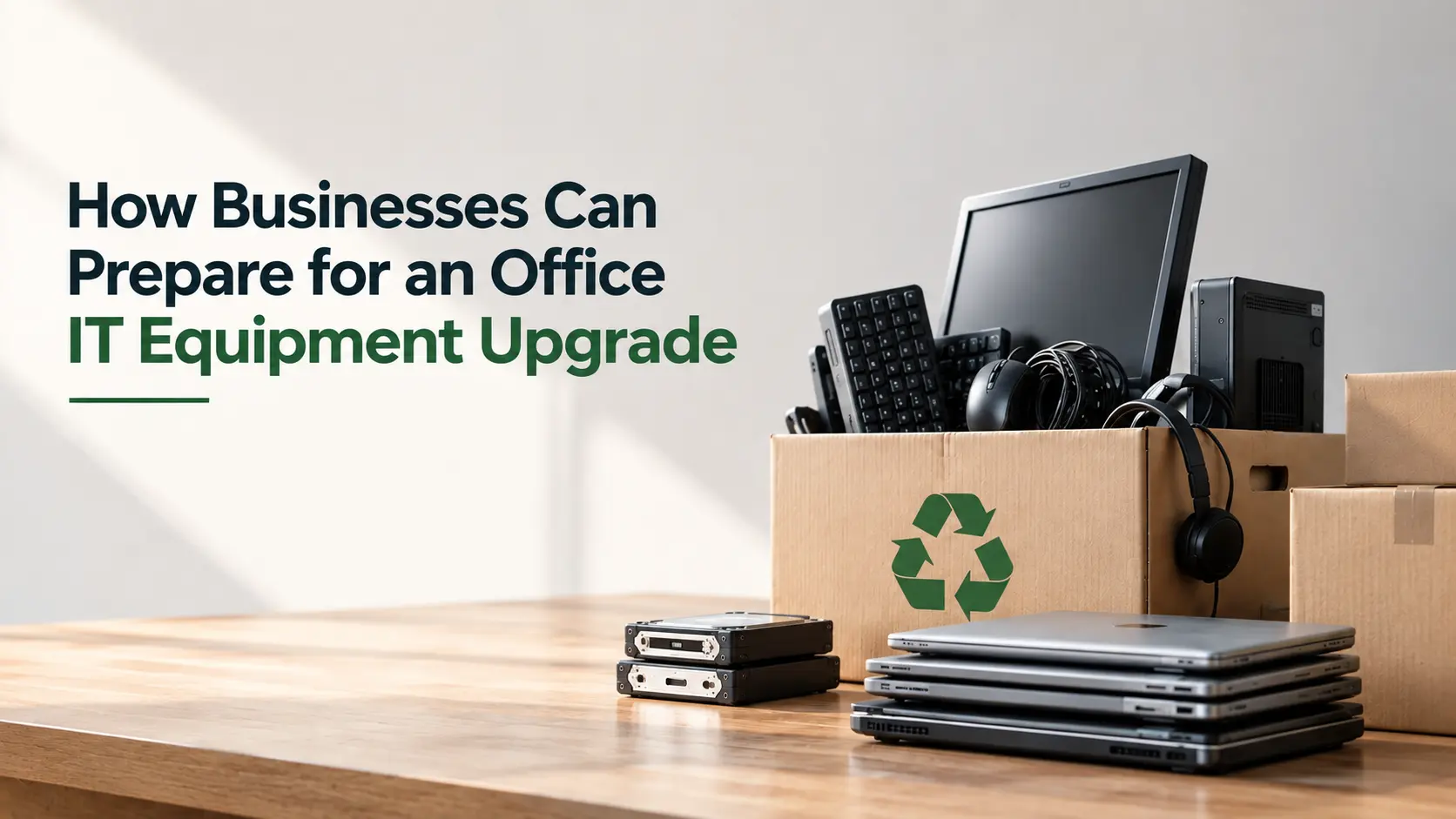
The journey begins when retired equipment is collected from the business location. This can include laptops, desktops, servers, mobile devices, routers, printers, and other electronic assets.
For effective corporate e-waste management, collection should be organized and traceable. Equipment needs to be handled carefully during pickup and transportation to reduce the risk of loss, damage, or unauthorized access.
A documented chain of custody can help businesses maintain visibility over their retired assets from collection through final processing.
Stage Two: Data Is Secured Before Further Processing
One of the most important parts of understanding what happens to old IT equipment is knowing how the information stored inside it is handled.
Storage devices may contain business records, customer information, employee data, financial documents, and other confidential files. Before recycling begins, appropriate data destruction or sanitization procedures should be carried out according to the organization’s security requirements.
Professional IT asset disposal may involve secure data wiping, degaussing, or physical destruction of storage media. Documentation can then provide businesses with evidence that the required data destruction process has been completed.
Stage Three: Equipment Is Assessed and Segregated
After secure handling, electronic equipment moves through an assessment and segregation stage. Different types of devices and materials require different processing methods.
For example, equipment may contain:
- Circuit boards and electronic components
- Metals and cables
- Plastics and glass
- Batteries
- Storage devices
Separating these materials is an important part of the electronic waste recycling process because it allows each component to be directed toward the appropriate recovery or treatment method.
Stage Four: Valuable Materials Enter the Recycling Stream
During IT equipment recycling, electronic devices are systematically dismantled and processed. Materials such as metals, plastics, and other recoverable resources can be separated for further recycling.
This process supports resource recovery and helps reduce the need to send electronic waste to landfills. At the same time, components requiring specialized handling can be managed through appropriate recycling processes.
This is the core purpose of responsible e-waste disposal ensuring that retired technology is handled in a way that considers both environmental protection and resource conservation.
Stage Five: Documentation Closes the Loop
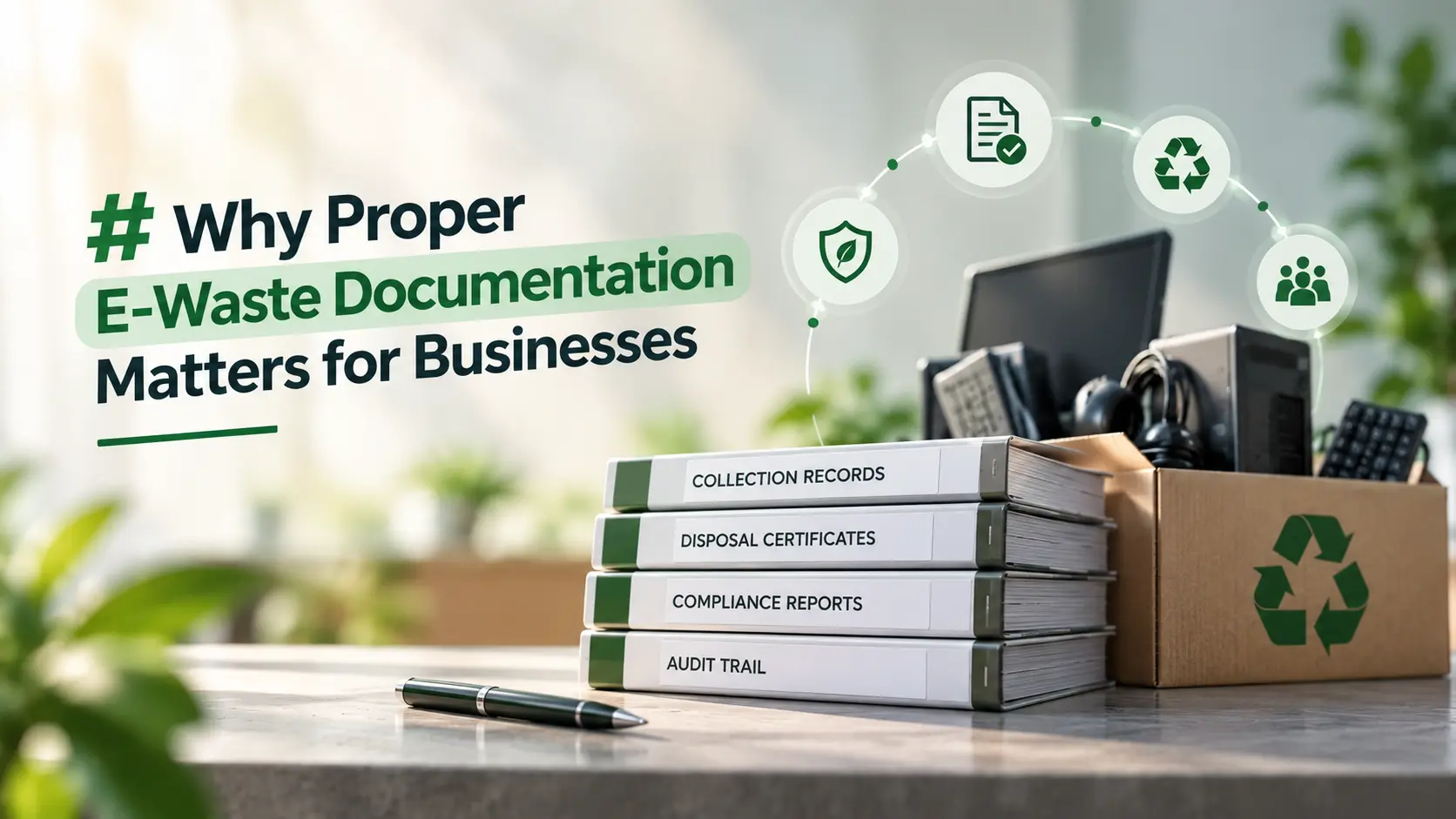
The final stage is often just as important for a corporate organization as the physical recycling process. Businesses may require manifests, recycling certificates, destruction certificates, and other compliance-related records.
These documents help demonstrate that business e-waste recycling has been completed through a structured and accountable process.
From Retired Assets to Responsible Resource Recovery
So, what happens to old IT equipment after it leaves your office? When managed through a professional recycling process, it follows a journey of secure collection, data protection, segregation, material recovery, responsible recycling, and compliance documentation.
Ambito E-Care helps organizations manage this complete journey through secure and systematic e-waste solutions. As an MPCB-Approved E-Waste Recycler, Ambito E-Care provides Pan-India Services for the collection and responsible recycling of laptops, desktops, servers, mobile devices, networking equipment, and other electronic waste.
With Complete EPR Management & Compliant Recycling, secure handling, data destruction capabilities, and transparent documentation, Ambito E-Care is committed to Compliance, Sustainability, and Responsible Recycling—helping businesses ensure that old IT equipment receives the responsible end-of-life management it deserves.