If It Isn’t Documented, Can Your Business Prove It Was Done?
The physical collection is only the starting point when companies dispose of old laptops, servers, desktops, mobile devices or other electronic assets. Equally important is the question: can the organization show what happened to those assets once they left the office?
This is where e-waste documentation becomes essential.
For corporate organizations, good records provide a clear trail from asset retirement and collection, through data destruction and recycling, to final certification. Good documentation can keep you compliant, accountable, prepared for environmental reporting and audit-ready.
E-Waste Documentation Creates a Clear Disposal Trail
Electronic equipment often moves through several stages after retirement. Without proper records, businesses may lose visibility into where assets were collected, how they were transported, and whether they were processed responsibly.
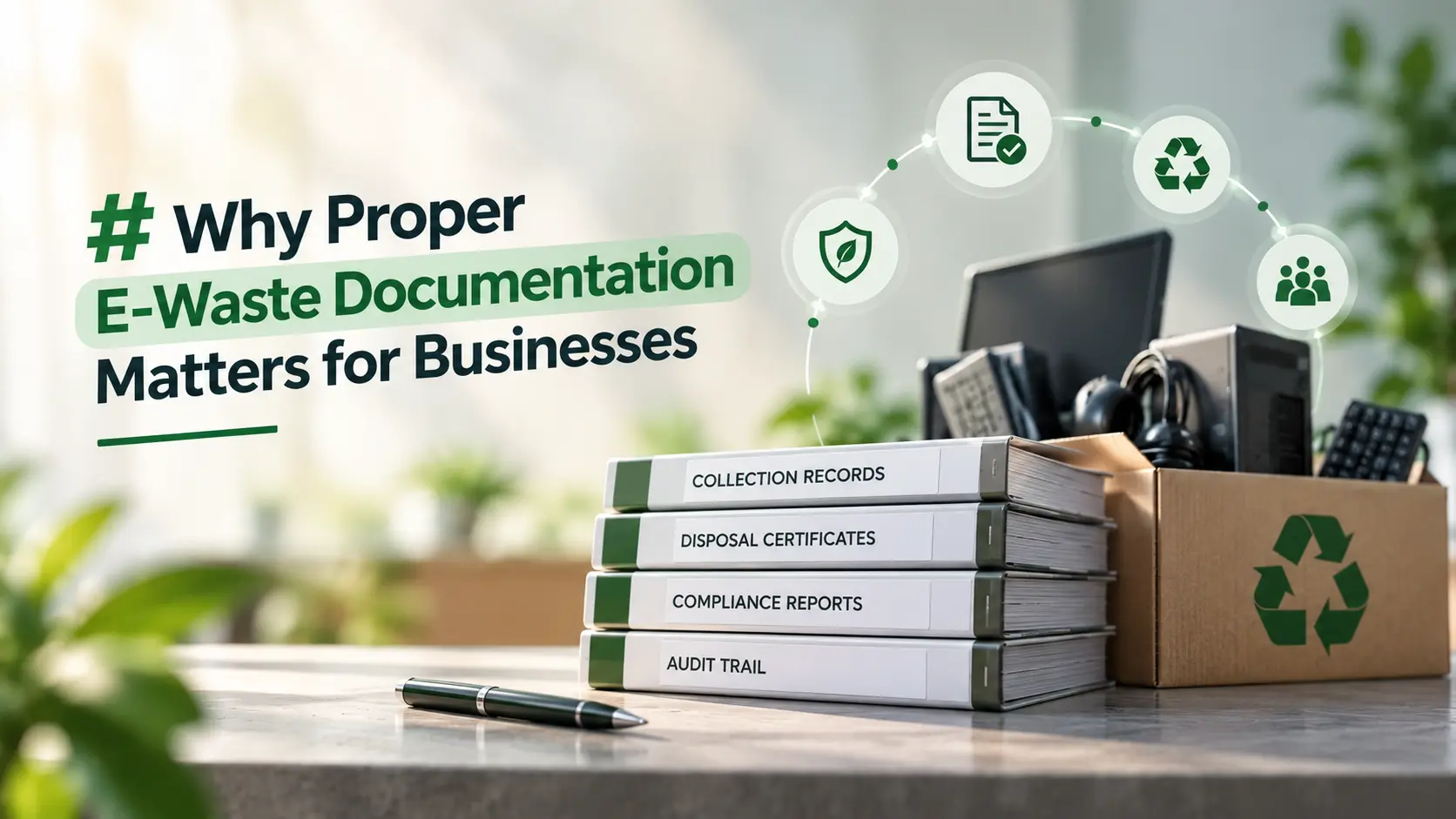
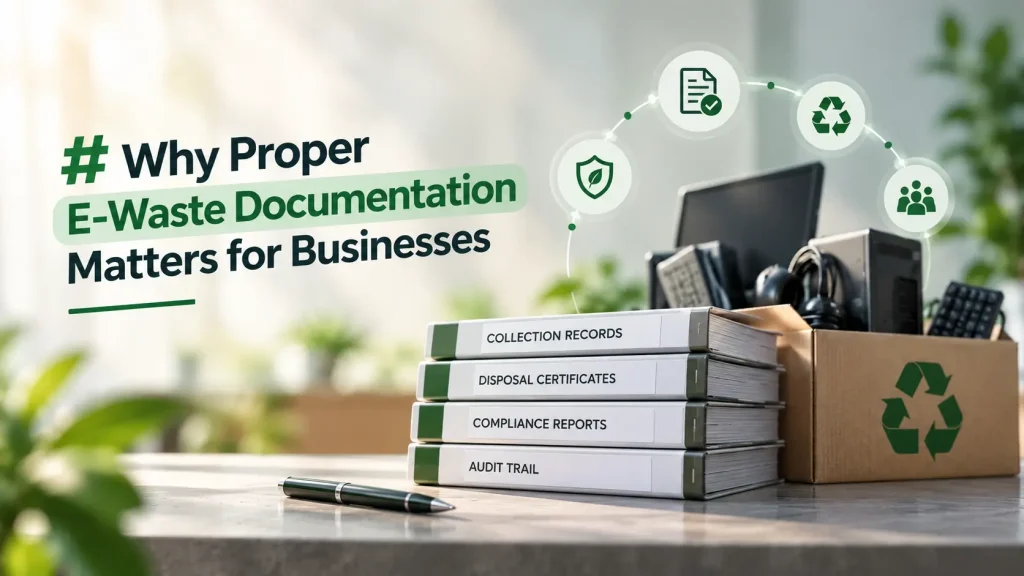
A structured documentation process may include records relating to:
- Retired IT assets
- Collection and pickup details
- Transportation and chain of custody
- Data destruction
- Recycling activities
- Final compliance certification
These e-waste recycling records help businesses maintain better control over their electronic assets throughout the disposal journey.
Why an E-Waste Disposal Certificate Matters
For a business, simply handing over old equipment is not always enough. Documentation provides evidence that the disposal process has been completed through an appropriate channel.
An e-waste disposal certificate or recycling certificate can become an important part of a company’s compliance records. Depending on the services provided and the disposal process, organizations may also receive documentation relating to data destruction and recycling.
These records are particularly useful for companies that need to demonstrate responsible environmental practices to management teams, auditors, clients, or other stakeholders.
Supporting Corporate Compliance and Audits
Good e-waste compliance documentation helps businesses prepare for internal and external reviews.
During an audit, organizations may need to show how retired electronic assets were managed. Missing records can make it difficult to establish whether the disposal process followed internal policies and applicable requirements.
Keeping documentation organized can support:
- Environmental audits
- Corporate compliance reviews
- ESG and sustainability reporting
- Asset disposal verification
- Regulatory recordkeeping
- Internal governance processes
For this reason, business compliance should be considered from the beginning of the disposal process rather than after the equipment has already been recycled.
Documentation Also Supports Data Security
Corporate devices can contain confidential information long after they are removed from active use. When storage media is wiped or physically destroyed, businesses may require evidence that the required action has been completed.
Data destruction certificates can provide an additional level of accountability, helping organizations maintain records of how sensitive information was handled during corporate e-waste management.
This creates an important connection between IT security and responsible environmental practices.
What Businesses Should Keep on Record
A practical documentation system should make it easy to trace every major stage of the disposal process. Businesses should consider maintaining:
- IT asset inventory and retirement records
- Collection and transportation details
- Chain-of-custody documentation
- Data destruction certificates
- Recycling certificates
- EPR and compliance-related records
- Audit support documents
A centralized system for these records can make compliant e-waste disposal easier to manage, particularly for organizations operating across multiple locations.
Frequently Asked Questions
Q1. Why is e-waste documentation important?
Ans: It helps businesses track disposal, maintain compliance, and stay audit-ready.
Q2. What documents are needed for e-waste disposal?
Ans: Common records include asset details, collection records, data destruction certificates, recycling certificates, and EPR documents.
Q3. What is an e-waste disposal certificate?
Ans: It provides proof that electronic waste was responsibly processed through an appropriate recycling or disposal channel.
Conclusion: Documentation Turns Disposal Into Accountability
Responsible e-waste management isn’t just about where electronic equipment ends up, it is also about being able to demonstrate how it was managed.
Good e-waste record keeping helps business by adding transparency, supporting compliance, improving audit readiness and providing confidence that retired IT assets have been disposed of responsibly.
Ambito E-Care supports organizations with secure, systematic, and documented e-waste solutions. As an MPCB-Approved E-Waste Recycler offering Pan-India Services, Ambito E-Care provides secure collection, tracked logistics, data destruction, responsible recycling, and compliance certification.
With Complete EPR Management & Compliant Recycling, including e-waste manifests, recycling certificates, destruction certificates, and audit support documentation, Ambito E-Care helps businesses build a more transparent approach to corporate e-waste management—while remaining committed to Compliance, Sustainability, and Responsible Recycling.