Modern businesses depend heavily on technology, from laptops and servers to mobile devices, printers, and networking equipment. However, when these assets become outdated or reach the end of their usable life, organizations need a structured plan for disposal. A well-planned corporate e-waste disposal checklist helps businesses protect sensitive data, meet compliance requirements, and support environmental sustainability.
Whether you are managing an IT refresh project or clearing outdated equipment from multiple offices, following the right corporate e-waste management process can make disposal safer and more accountable.
1. Create an Inventory of Electronic Assets
The first step in any business e-waste disposal plan is knowing exactly what needs to be disposed of. Create a detailed inventory that includes:
- Desktops and laptops
- Servers and storage devices
- Mobile phones and tablets
- Routers and modems
- Printers and scanners
- Keyboards, mice, USB devices, cables, and other accessories
A proper inventory helps IT and procurement teams track assets and ensures that no electronic equipment is overlooked during disposal.
2. Identify Devices Containing Sensitive Data
Data security should be a priority during IT equipment disposal. Old laptops, desktops, servers, USB drives, and mobile devices may still contain confidential company, employee, or customer information.
Before handing over equipment, businesses should ensure that data is securely wiped or physically destroyed using appropriate processes. It is also important to obtain documentation confirming the data destruction process.
3. Choose an Authorized E-Waste Recycler
One of the most important steps in a corporate e-waste disposal checklist is selecting the right recycling partner. Businesses should work with an authorized recycler that follows applicable environmental and regulatory requirements.
Check whether the recycling partner can provide:
- Secure collection and transportation
- Documented chain of custody
- Data destruction support
- Safe dismantling and recycling
- Recycling and destruction certificates
- Compliance and audit documentation
Using an authorized recycler helps organizations make their electronic waste disposal for businesses more transparent and responsible.
4. Ensure Secure Collection and Handling
The e-waste disposal process should not begin only at the recycling facility. Secure handling starts when equipment is collected from your office.
Businesses should ensure that electronic assets are properly tracked during pickup and transportation. A documented chain of custody provides greater visibility into where equipment goes and how it is handled before final recycling.
5. Maintain Compliance Documentation
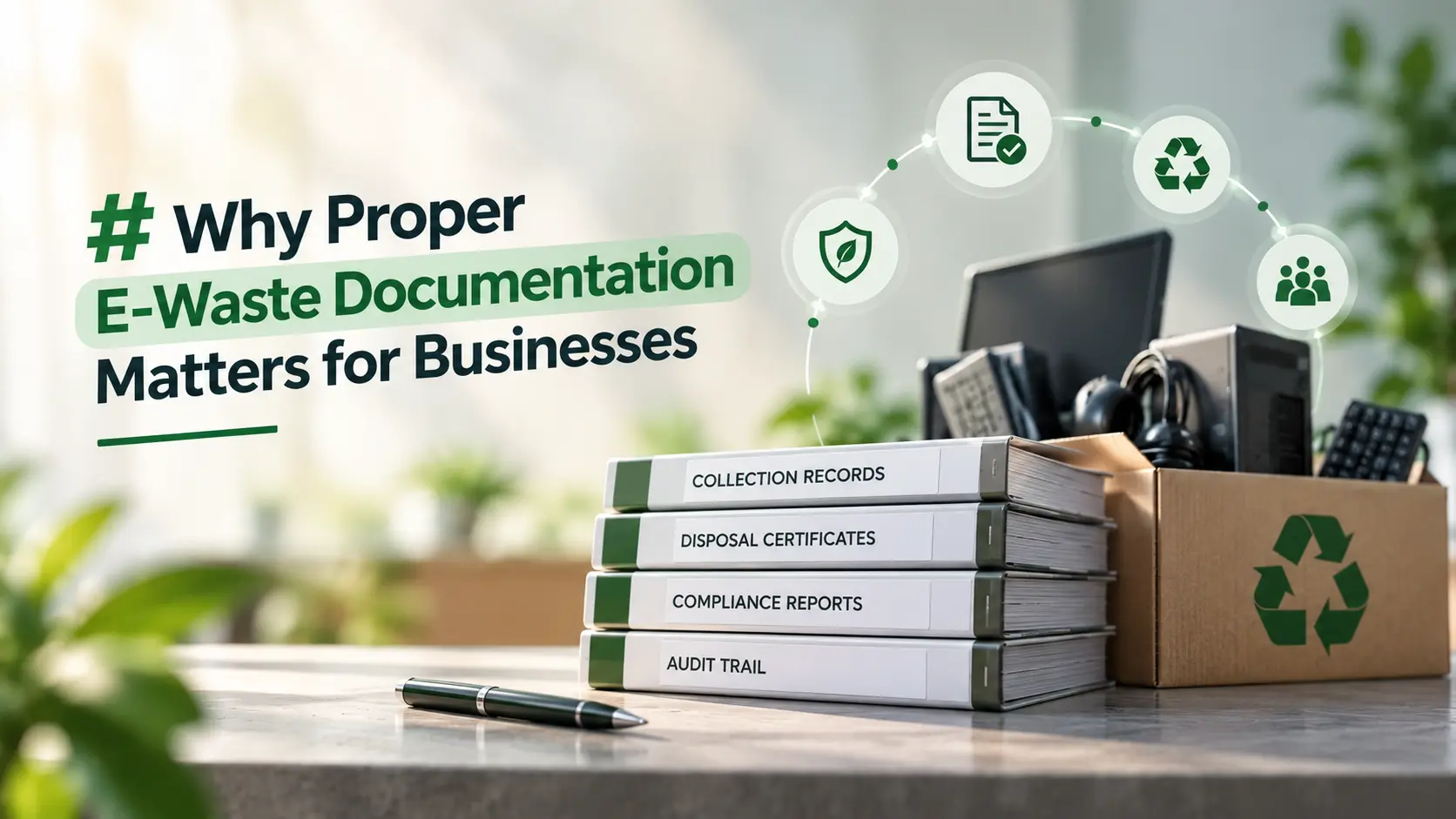
Proper documentation is essential for corporate organizations. Records such as e-waste manifests, recycling certificates, destruction certificates, and audit support documents can help demonstrate responsible disposal practices.
Maintaining these records also makes it easier for organizations to support internal compliance, sustainability, ESG, and environmental audit requirements.
6. Focus on Responsible E-Waste Recycling
Electronic devices contain valuable materials that can often be recovered through scientific recycling processes. Responsible e-waste recycling helps reduce unnecessary landfill disposal while supporting resource recovery and a more sustainable approach to technology management.
Businesses should avoid sending electronic waste to informal or unverified disposal channels where safe handling and environmental practices cannot be assured.
Conclusion: Make Corporate E-Waste Disposal a Responsible Business Practice
A structured corporate e-waste disposal checklist helps organizations manage end-of-life electronics with greater security, compliance, and accountability. From asset inventory and data destruction to secure logistics and certified recycling, every step plays an important role in effective corporate e-waste management.
Ambito E-Care supports businesses with secure and systematic e-waste solutions across India. As an MPCB-approved e-waste recycler, the company provides Pan-India services for a wide range of electronic equipment, with a focus on secure handling, compliant recycling, documentation, sustainability, and responsible recycling. With support for corporate e-waste management and compliant IT asset disposal, Ambito E-Care can help organizations take a more responsible approach to managing their electronic waste.